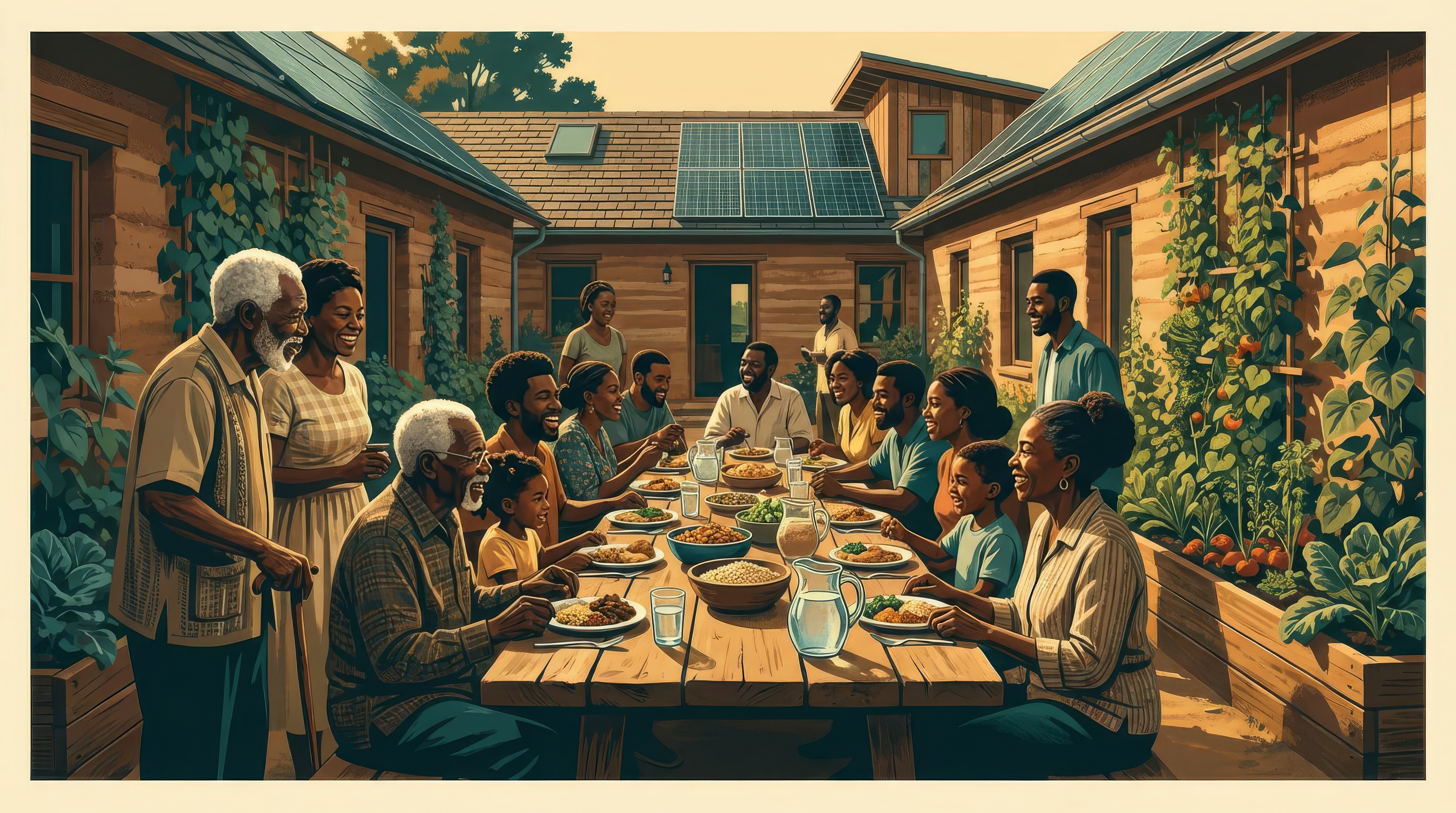
The Ten-Point Program was not defeated. It was classified, then quietly carried forward — across generations, under different names, in thousands of cities. You are standing inside what it became.
All ten points, rendered as the protocols they became. Each card shows the 1972 clause, the 2069 implementation, the one-line spec, and the provenance trace. These are the reference outputs — what the Compiler produces by default. Use them to calibrate your ear before generating your own in §C.
The Compiler is an AI instrument built inside the world of this file. It speaks from 2069 — as an archivist who lived through the continuing program — and generates a specification for any of the Ten Points on demand.
To use it: select a point number (01–10) from the panel on the left. The point text will appear below it so you can read what you're compiling. Hit COMPILE. The instrument will generate a 2069 specification in four fields — Protocol, Status, Specification, and Provenance — in the output panel on the right.
Every compilation is fresh. No two are identical. The instrument reads a locked system prompt that keeps it inside the voice and world of the file — grounded in real history, extended into the speculative future the Party wrote toward.
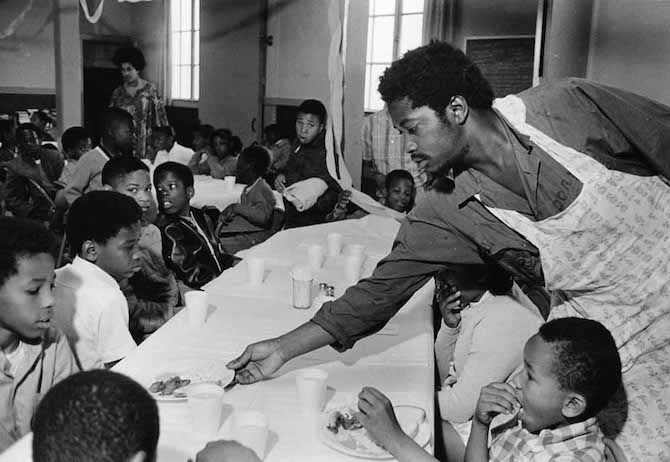
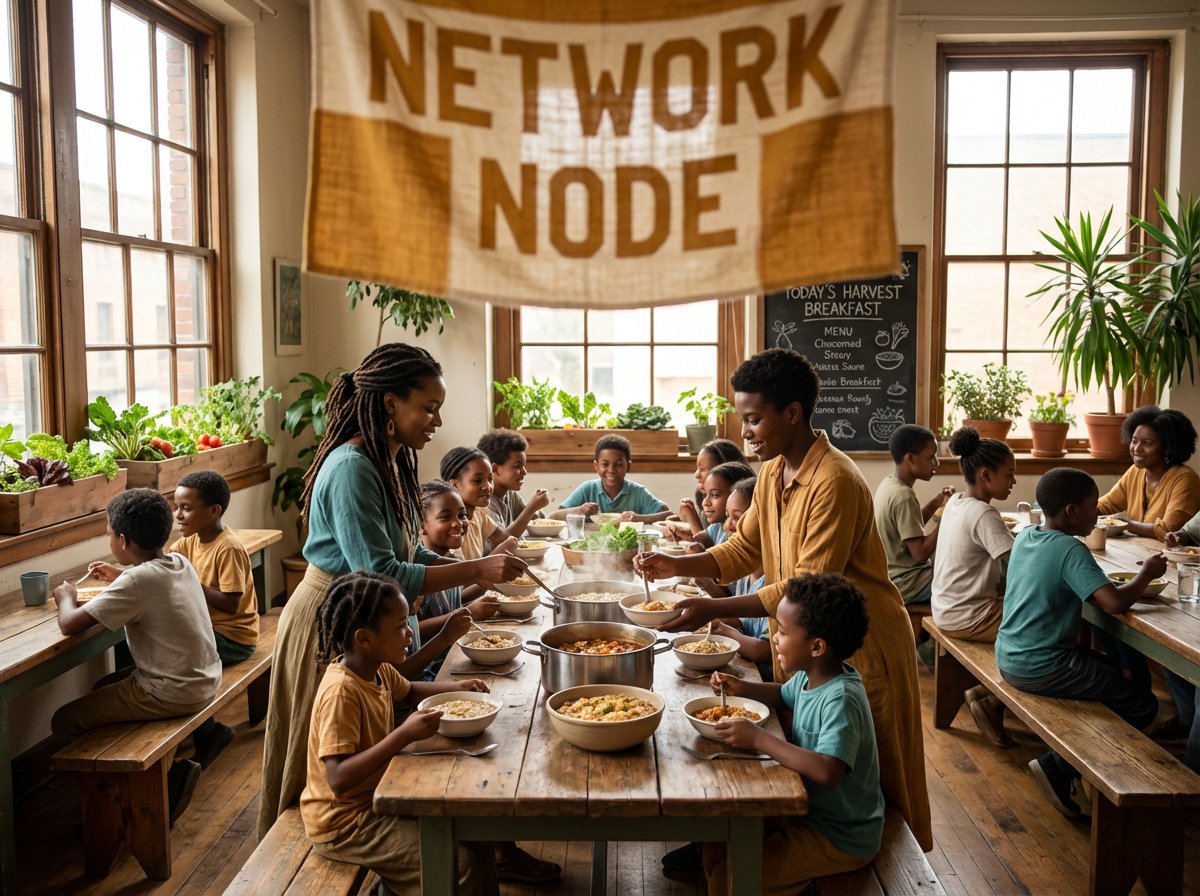
The Free Breakfast Program launched January 1969 at St. Augustine's Episcopal Church in Oakland. It never stopped. It became the mesh. Hover any node to read from it.
January 1969. St. Augustine's Episcopal Church, West Oakland. The Party's first breakfast service. Eleven children the first day.
A breakfast service in a 2069 community center. Same hour. Same act. One hundred years on.
Each morning, the network transmits. Short dispatches, rotating, from nodes across the continuing program. Press the dial to tune in.